
THE EVIDENCE
Ancient wisdom, handed to you in a modern glass.
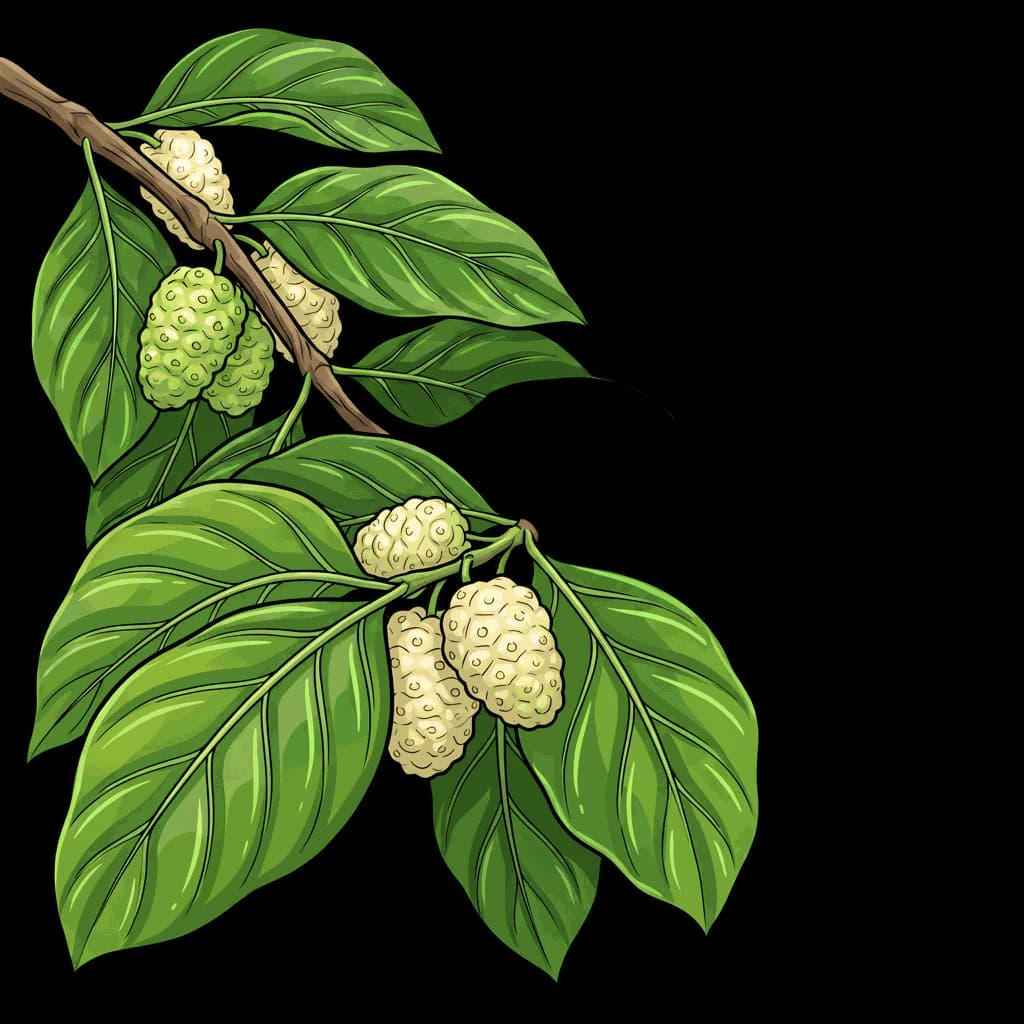
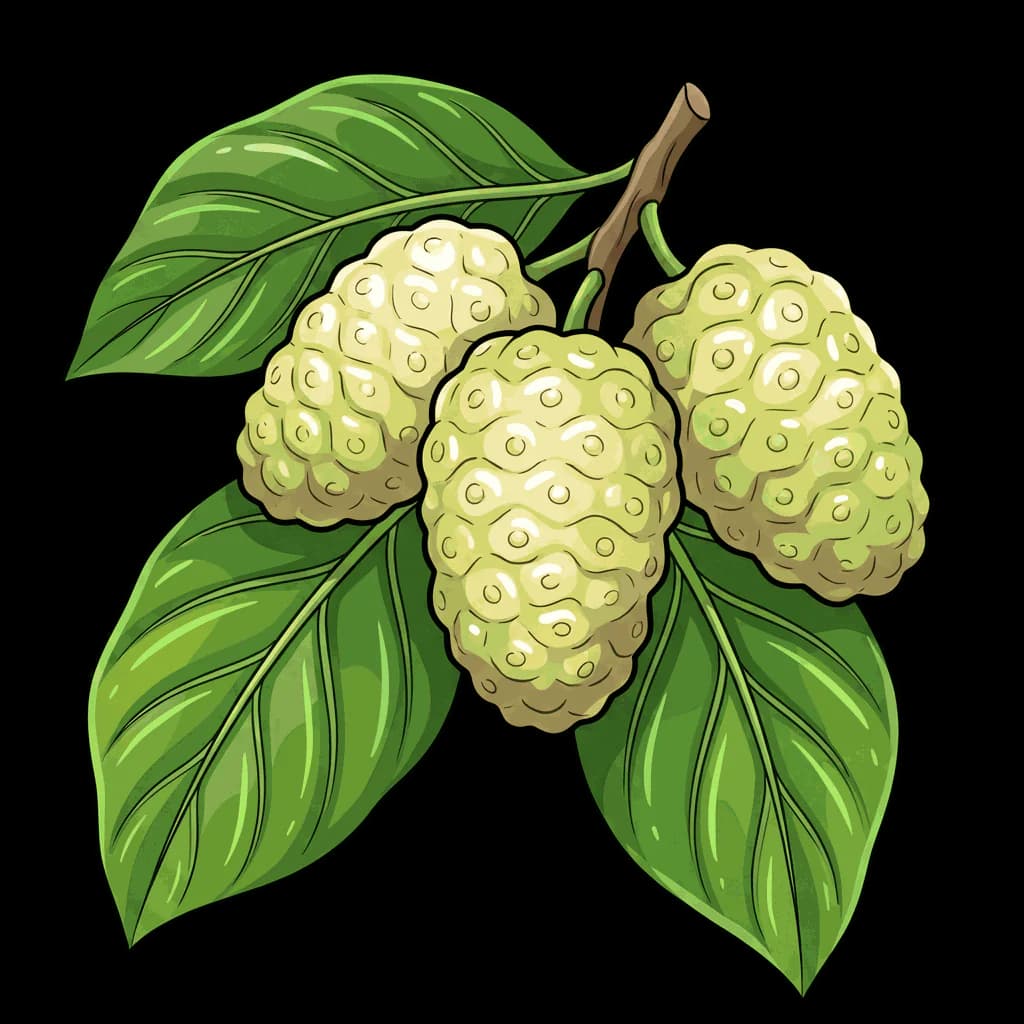
The noni fruit has a three-thousand-year record of traditional use in Indian Ayurvedic medicine. That track record is the start of the evidence, not the end of it. Over the past two decades, published research has begun to characterise the compounds in the fruit. Most of that work is early-stage: chemical analysis, antioxidant assays, and animal models, not large human trials.
THE PUBLISHED RESEARCH
What the studies actually say.
Below are real, peer-reviewed studies on the noni fruit and its compounds. Each one links to its source on PubMed or the journal. We have summarised what each paper examined, not what we wish it found.
COMPOUND CHARACTERISATION
An analysis of the noni fruit isolated two new iridoid glucosides alongside seventeen previously known compounds, then tested their ability to neutralise free radicals in the laboratory.
JUICE CONSTITUENTS
A study of noni fruit juice identified previously undescribed constituents along with known iridoid glycosides, helping to map which compounds are actually present in the juice.
IRIDOID PROFILE
Researchers quantified the major iridoids across the fruit, leaf, seed, root, and flower, and across growing regions, finding deacetylasperulosidic acid (DAA) to be the dominant iridoid in the fruit.
ANTIOXIDANT ACTIVITY (ANIMAL MODEL)
In rats given DAA for seven days, researchers measured a dose-related change in two markers of oxidative stress. This is a preclinical animal result, not evidence of an effect in people.
SAFETY: THE HONEST CAVEAT
Two case reports described liver injury in people drinking large daily volumes of noni juice over weeks to months. Such reports are rare, but we list them because hiding the safety literature would be the opposite of credible.
SAFETY: TOXICITY TESTING
A subchronic toxicity study concluded that noni fruit at the tested doses was unlikely to produce adverse liver effects. Read alongside the case reports, the picture is: generally well tolerated, with rare exceptions worth knowing about.
READ THE EVIDENCE
The same studies, grouped by what they show.
The published work falls into three groups: what the chemistry has characterised, what early animal models suggest, and what the safety literature reports. We have arranged the same cited studies that way, so you can read them by type.
- COMPOUND CHEMISTRYCOMPOUND CHARACTERISATIONSu et al. (2005), Journal of Natural Products, 68(4), pp. 592 to 595
- COMPOUND CHEMISTRYJUICE CONSTITUENTSSamoylenko et al. (2006), Journal of Agricultural and Food Chemistry, 54(17), pp. 6398 to 6402
- ANIMAL MODELANTIOXIDANT ACTIVITY (ANIMAL MODEL)Ma et al. (2013), Journal of Analytical Methods in Chemistry, article 804504
- SAFETYSAFETY: THE HONEST CAVEATStadlbauer et al. (2005), World Journal of Gastroenterology, 11(30), pp. 4758 to 4760
- SAFETYSAFETY: TOXICITY TESTINGWest et al. (2009), Journal of Toxicological Sciences, 34(5), pp. 581 to 585
3,000 YEARS
Used long before it was studied.
In India, the noni fruit was used for its perceived restorative properties: in teas, poultices, and juices. Generations of Ayurvedic practitioners kept the same plant in continuous use. We treat that as a long track record and a place to start looking, not as proof of any health claim.
Traditional use is not clinical evidence. It is a hypothesis generator. It tells modern researchers where to look. The long record helped point investigators toward the iridoid compounds that now sit at the centre of the published chemistry.
THIRD-PARTY TESTING
Independent laboratory testing.
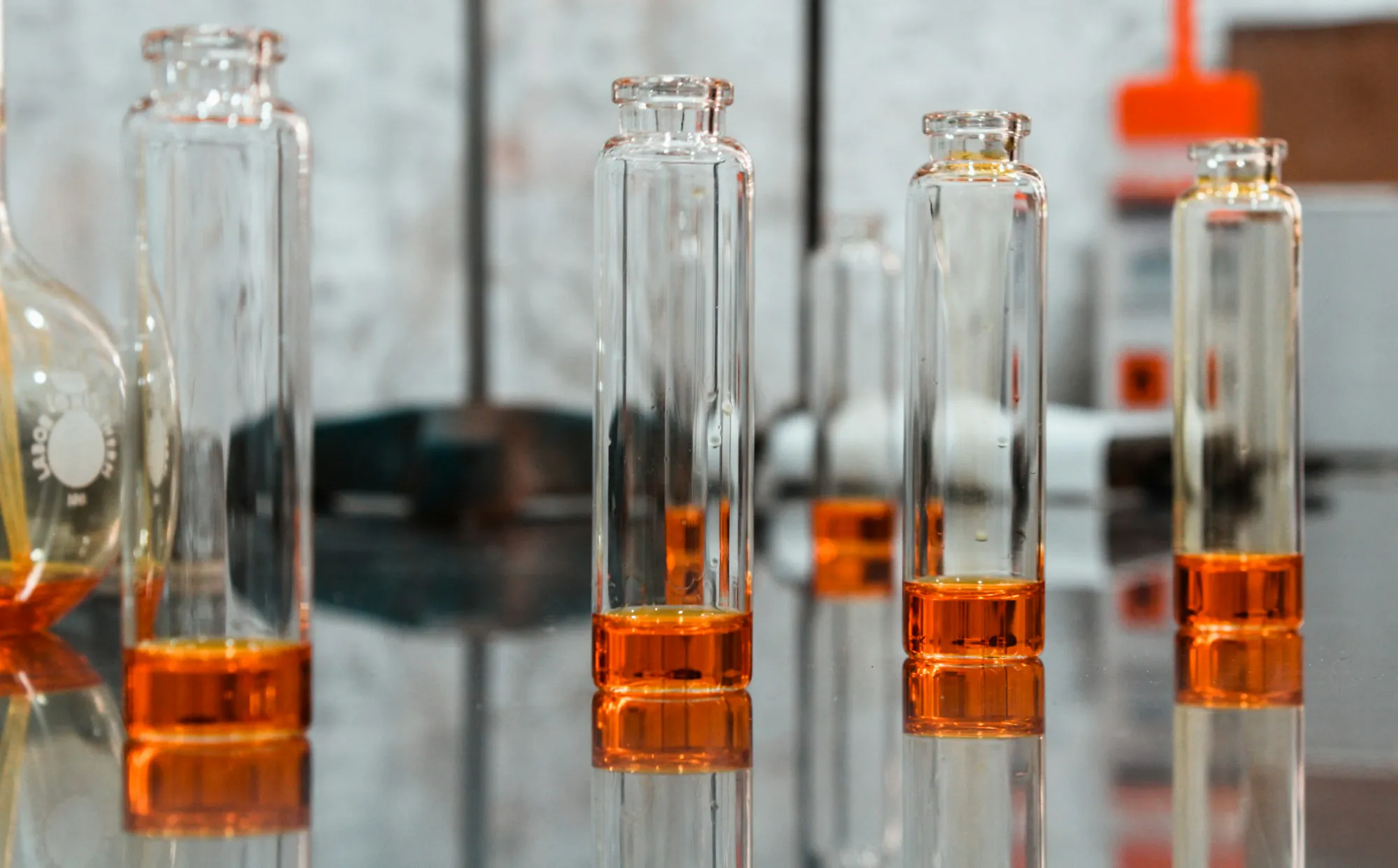
We test Divine Noni with an accredited independent laboratory before it ships. The panel covers heavy metals (lead, mercury, cadmium, arsenic), microbial safety, pesticide residues, and label-accuracy verification.
Results are available on request. We are building a page where the lab reports can be downloaded. When it is ready, the reports will be public.
SOURCING
Traceable from fruit to bottle.
Our noni is sourced from growers in India, where the fruit has been cultivated for generations. Each growing partner is audited for cultivation practices, water quality, and soil health.
Pressing the whole fruit helps preserve the naturally occurring compound profile. We do not concentrate, reconstitute, or blend with other juices.
WHAT WE WILL NOT SAY
If it is not proven, we do not claim it.
Noni has a long record of traditional use and a growing body of published research, but most of that research is early-stage: chemical analysis, laboratory assays, and animal studies. There is no large randomised controlled trial showing that noni juice treats or prevents any specific disease, so we will not say that it does. What we will say: the compounds are real and documented, the traditional track record is genuinely long, and the safety literature is mixed enough to be worth reading honestly. That is what the evidence supports.
What we will say
- The compounds are real and documented in published chemistry.
- The traditional track record is genuinely long.
- The safety literature is mixed, and worth reading honestly.
What we will not say
- That noni juice treats or prevents any specific disease.
- That a laboratory or animal result proves an effect in people.
- Anything the published evidence does not yet support.